


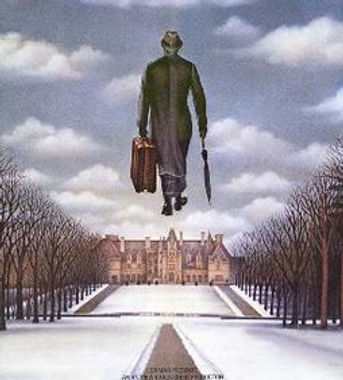
“I like to watch.”
synopsis
After his employer dies, a simple-minded gardener who has spent his entire life watching television wanders into the outside world—where his literal, childlike statements are mistaken for profound wisdom.

pairs well with ...
mini-review
This is satire at its most refined. Being There never raises its voice, never winks at the audience, and never explains the joke—because the joke is us. Peter Sellers delivers a near-silent performance of astonishing control, creating a character who functions like a mirror: people see intelligence, depth, and authority not because it’s there, but because they expect it to be. The result is funny, chilling, and still uncomfortably accurate.
Quiet evenings, political fatigue, and the unsettling realization that confidence and comprehension are often confused.
Absurdist's Corner
Chance says exactly what he means—nothing more, nothing less—and is elevated to intellectual and political significance. In a world addicted to interpretation, blankness becomes brilliance.
fun facts
Peter Sellers considered this his finest performance, and many critics agree. It was his final major film before his death.
Director Hal Ashby fought to keep the famous blooper reel over the end credits—something unusual at the time.
The novel’s author, Jerzy Kosiński, has a cameo as the party guest who claims to be a close friend of “Chauncey Gardiner.”
The final “walking on water” moment wasn’t in early drafts; it was added late and remains one of the most debated endings in film satire.