


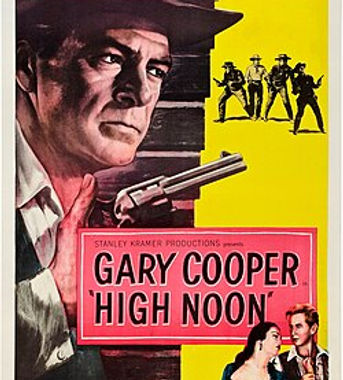
“This is just a dirty little village in the middle of nowhere.”
synopsis
On the day Marshal Will Kane plans to leave town with his new bride, word arrives that outlaw Frank Miller — whom Kane sent to prison — has been released and is arriving on the noon train with revenge in mind. Kane asks the townspeople for help. One by one, they refuse.
As the clock advances toward noon in near real-time, Kane walks the empty streets alone, confronting not just the returning outlaw, but the moral cowardice of the community he protected.

pairs well with ...
mini-review
High Noon strips the Western to its moral skeleton.
There are no sprawling cattle drives. No comic relief sidekicks. No sweeping cavalry charges. Just a man, a clock, and a town that would prefer comfort over courage.
What makes it enduring isn’t the showdown — it’s the isolation. Kane’s greatest enemy isn’t Frank Miller. It’s social self-interest. The church scene, where townspeople debate whether helping is “worth the trouble,” feels uncomfortably modern.
Gary Cooper plays Kane not as invincible, but tired — aging, human, afraid. That vulnerability is the point. Courage here isn’t swagger. It’s decision.
As Westerns go, this is the ethical benchmark.
A reflective viewing.
A double feature with 3:10 to Yuma (1957) for another tight moral confrontation.
Or with Shane if you want to contrast two visions of reluctant heroism.
Absurdist's Corner
Frank Miller’s gang arrives in town like they’re posing for a recruitment poster — walking side by side in broad daylight instead of slipping in quietly. If revenge was the goal, subtlety might have helped. Instead, they practically lined themselves up like targets at a shooting gallery.
fun facts
The film unfolds almost in real time, mirroring the ticking clock toward noon.
Screenwriter Carl Foreman later said the film reflected the Hollywood blacklist climate, with Kane representing those abandoned by colleagues.