


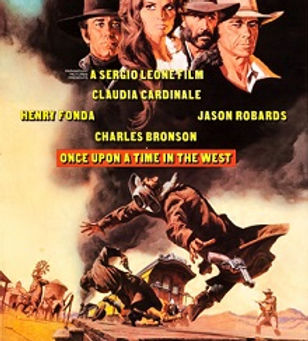
“People scare better when they’re dying.”
synopsis
A mysterious harmonica-playing drifter arrives in the desert town of Flagstone just as a brutal railroad tycoon’s enforcer, Frank, murders an entire family. The widow, Jill McBain, inherits land that is strategically vital for the coming railroad — making her a target.
As outlaws, killers, and businessmen circle one another, the town becomes a stage for the final evolution of the West — from lawless frontier to industrial civilization.
This is not a fast-moving plot. It’s a ritual.

pairs well with ...
mini-review
If High Noon is stripped-down moral clarity, Once Upon a Time in the West is myth stretched to operatic proportions.
Leone slows everything — glances, footsteps, windmills creaking — until tension becomes monumental. Violence doesn’t erupt; it detonates.
Henry Fonda’s casting is genius. Known for upright heroes, he plays Frank with cold, smiling cruelty. Charles Bronson’s Harmonica is less a man than a ghost of vengeance. Claudia Cardinale brings emotional gravity to a story otherwise dominated by archetypes.
The film isn’t just about revenge. It’s about the death of the frontier myth. The railroad is progress — and erasure.
A large screen.
No distractions.
A double feature with The Good, the Bad and the Ugly for peak spaghetti grandeur.
Or contrast with High Noon to see minimalism versus mythic scale.
Absurdist's Corner
A harmonica-playing stranger appears exactly when revenge demands poetic timing — because in Leone’s West, destiny keeps perfect appointments
fun facts
Ennio Morricone composed character-specific themes before filming began; Leone played them on set to shape performances.
Henry Fonda was deliberately cast against type to shock audiences.